 Szeto Handyman
Picking the right type
- The full spot
- The pet door, close and clear
- Your cross street
- In-door: cut into a solid or hollow door. Neat, permanent, and the most common choice.
- Sliding door insert: a tall panel that fits in the track next to the slider, with a flap built in. No cutting, so it suits renters.
- Screen door flap: a light frame for a screen door; easy, but only as tough as the mesh around it.
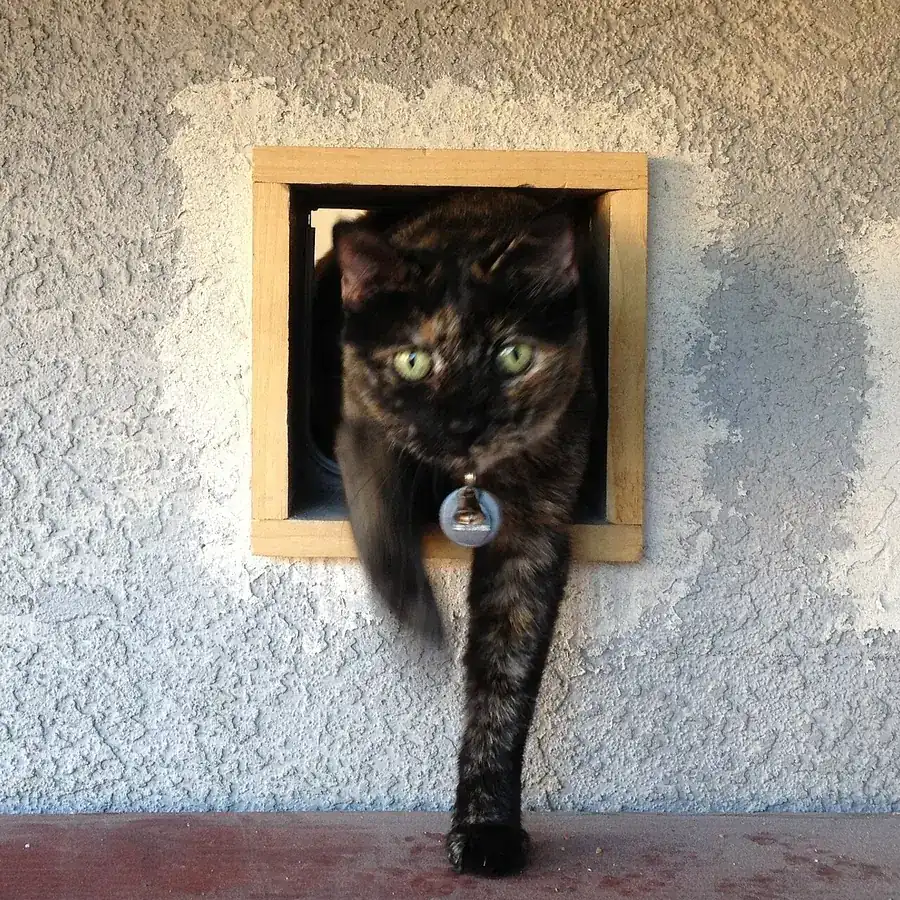
- Wall mount: through an exterior wall. That is a framing job with siding or stucco work, so we only take it on after seeing the wall.
Sizing for your pet
Measure your pet at the shoulder and across the widest point. The flap should be a little taller and wider than that, and the top of the opening should sit above the shoulder so the pet does not duck hard. The bottom of the opening, called step-over, should be low enough for an older dog or a cat to step through.
If you have a puppy, size for the adult dog. We set the cut height to your measurements, not to a default line on the template.
Door materials
- Photo first
- The pet door price, agreed
- Working before we go
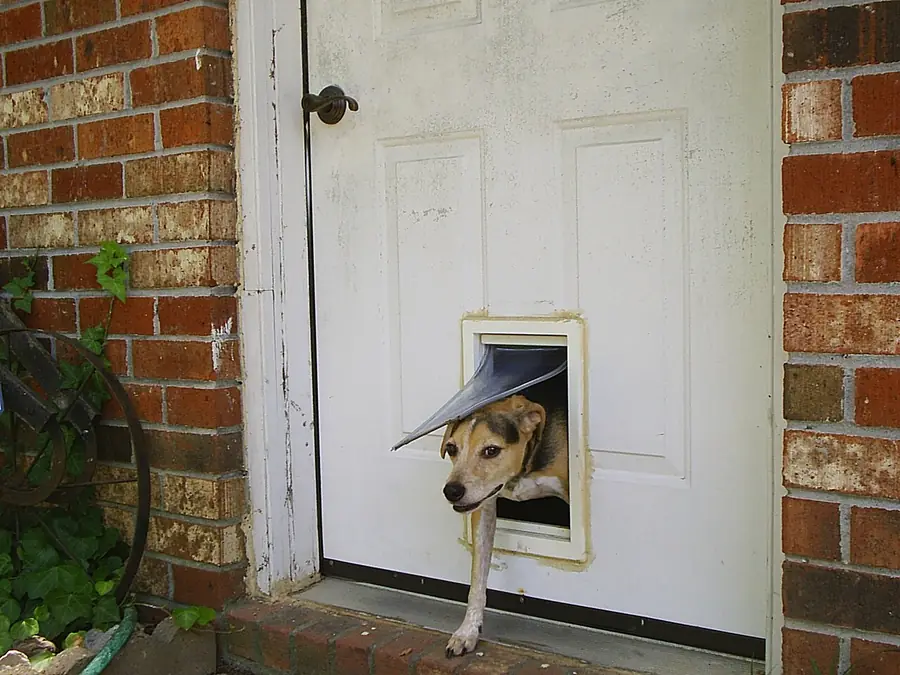
Solid wood doors cut cleanly and hold the frame screws well. Hollow-core doors need the cut edge framed so the frame clamps onto something solid. Steel and fiberglass doors cut with the right blade and are sealed at the cut edge to keep moisture out of the core.
Some fire-rated doors, such as the one between a garage and the house, should not be cut at all. We check the door edge label before cutting and point you to a slider insert or another door if a cut is not the right move.
Security and weather
Every pet door is an opening, so we install one with a locking cover for nights and trips. Electronic doors that open only for a collar tag keep out raccoons, which do roam through yards in the foothill cities.
Double-flap and magnetic-seal models hold drafts and dust far better than a single plastic flap. Placement matters too: a door hidden from the street, inside a fenced yard, is a better spot than the front door.
How the install goes
- We confirm the door type and measure your pet.
- The door comes off its hinges if needed so the cut is square.
- We mark the template level and cut the opening.
- The frame halves go on from each side and are tightened evenly.
- We test the flap, the lock cover and the door swing.
- Only a pet door
- Or several things
It depends on the job; we’ll tell you after seeing photos.
- Wide shotThe whole fixture and the space around it.
- Close-upLabels, model numbers, the leak or break.
- ConnectionsValves, pipes, wires or brackets.
- Send itText the photos with your cross street.
Renters and HOA homes
If you rent, ask the owner before cutting a door. A slider insert or a replacement door slab that you keep can avoid the question. For HOA homes, some exterior changes need approval; a slider insert is usually invisible from outside.
Training tips
Pets learn at their own pace. Tape the flap open at first so they see through it, use treats on the far side, then let the flap down. Cats can be cautious; patience works better than pushing.
Climate and placement
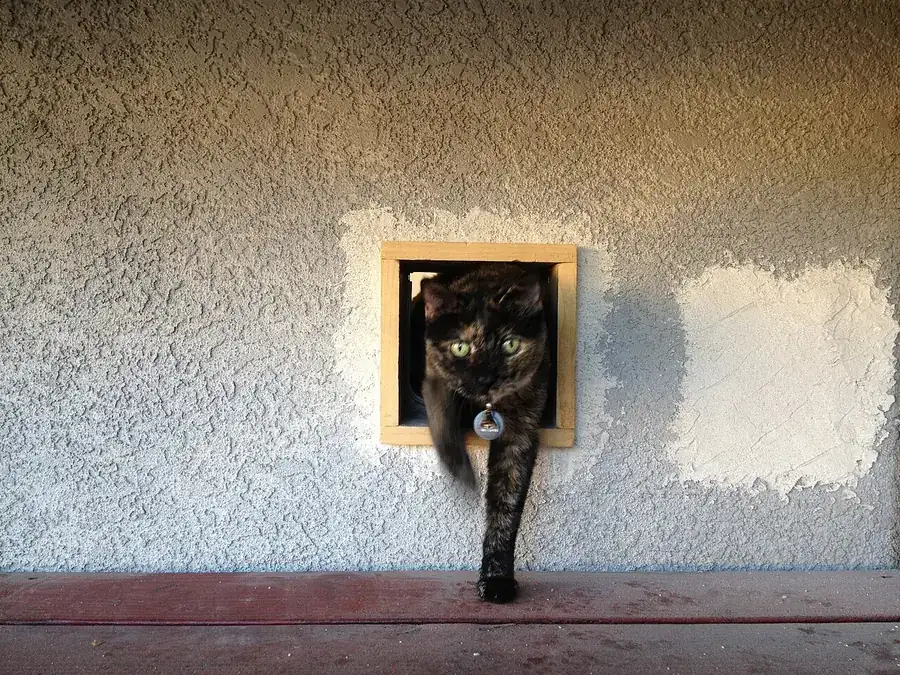
In the valley, a pet door facing the afternoon sun lets heat in on summer days. A door on a shaded side, or a model with an insulated flap, keeps the house cooler. We point out the trade-off when we look at your options.
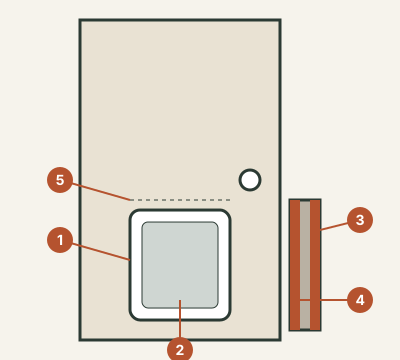
- Flap
- Cutout kept clear of the bottom rail
- Door edge in cross-section
- Inside and outside frames clamped through the cut
- Top of the cutout, set from the maker’s sizing guide for your pet
Doggy doors for older pets
Older dogs with stiff joints need a low step-over and a flap that does not push hard. A ramp or a step on the outside can help where the door sits above a patio. We set the height around how your pet moves now.
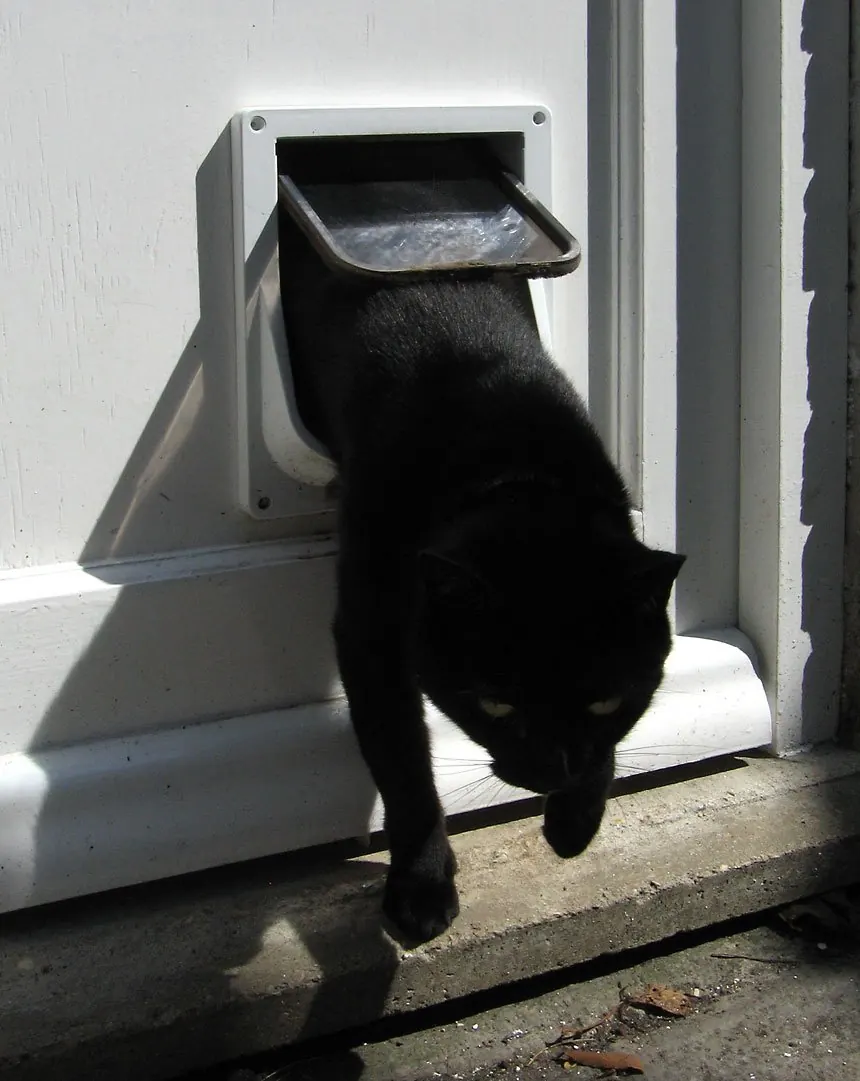
Cats and screens
Cats often prefer a small flap set in a window insert or a screen, especially in homes where the doors face the street. A screen flap is cheap and easy to swap, and a glass window insert works for indoor-outdoor cats in apartments when the owner agrees.
Maintenance
Flaps wear and lose their magnets or seals after a few years. Most makers sell replacement flaps that fit the same frame, so the door does not need to be recut. We note the brand and model so you can order the right one later.
- Hinge screwsA loose top hinge lets the door sag.
- Strike or latchThe latch misses the opening in the frame.
- SwellingSeasonal moisture makes edges rub.
- Fix orderTighten first, adjust next, plane last.
Cost of getting it wrong
A pet door cut too high or too low cannot be moved without a new door slab. That is why we measure your pet standing, check the step-over, and hold the template up for a look before any cutting starts. Five extra minutes of measuring saves buying a new door.
Coordinating with other work
If a door is being replaced anyway, ordering it with a pet door factory-cut or cutting the new slab before it is hung saves a step. We can also fit new weatherstripping and a sweep on the same door so the whole opening seals well.
- Small fixes and repairs
- Swaps on existing mounts
- Patching and adjusting
- Hardware, trim and assembly
- Structural framing changes
- Roofing and foundations
- New openings in walls
- Whole-room rebuilds
Sizes we stock
We can source small, medium and large flaps from common makers.
One more check
Before we leave, we watch your pet use the door once if they are willing, and adjust the flap tension if it is too stiff.
Related guide: What to check when a door will not latch.
Questions we get
- A heads-up text before the pet door
- Area protected and swept
Can you put a pet door in a glass slider?
Yes, with a panel insert that sits in the track. No cutting is needed.
Can you cut into a metal door?
Yes, on most steel exterior doors, with the cut edge sealed.
Can you remove a pet door?
We can patch with a cover plate or swap the door slab.
- Mon–Sat 8:30 AM–7 PM
- Closed Sunday
- Texts usually answered within the hour.
Do you supply the pet door?
You can buy one or we can source one sized for your pet.
Can you install one in a wall?
Only after seeing the wall, since it involves framing and siding work.
Can you lock a pet door?
Most pet doors come with a slide-in cover or locking panel. Electronic doors that open for a collar tag stay shut to other animals.
- Someone home works
- Gate code for the pet door job
How do electronic dog doors work?
A tag on the pet’s collar is read by a sensor in the door, which unlocks the flap for that pet and locks it again after it passes through.
How big should a dog door be?
Measure your dog’s shoulder width and the height from the floor to the top of the shoulders. The flap should be a little wider than the shoulders, with its top a little above shoulder height.
- Free estimate
- We ask before more pet door work
Get a quote for pet door installation
Text a photo and your cross street. Free estimates, and most texts are answered within the hour.
Good to fix along with the pet door
Easy to add on the same trip: screen and security screen door repair or door repair and installation. If the cause is elsewhere, see sliding glass door repair; fence and gate repair and sealing drafts around doors come up often too.
Repairs related to the pet door
Available across the San Gabriel Valley, including West Covina, Covina, Baldwin Park, Azusa, Temple City, Sierra Madre, Monrovia, Duarte, Irwindale and Glendora.