 Szeto Handyman
When trim needs attention
- A neighbor works too
- Keys for the trim visit
Baseboards take kicks from vacuums and chair legs, swell when floors are mopped wet, and pull away when houses settle. New flooring often leaves a gap at the wall that needs taller base or quarter round. Door casing cracks when a door is slammed for years. And many owners want crown molding to dress up a room that feels plain.
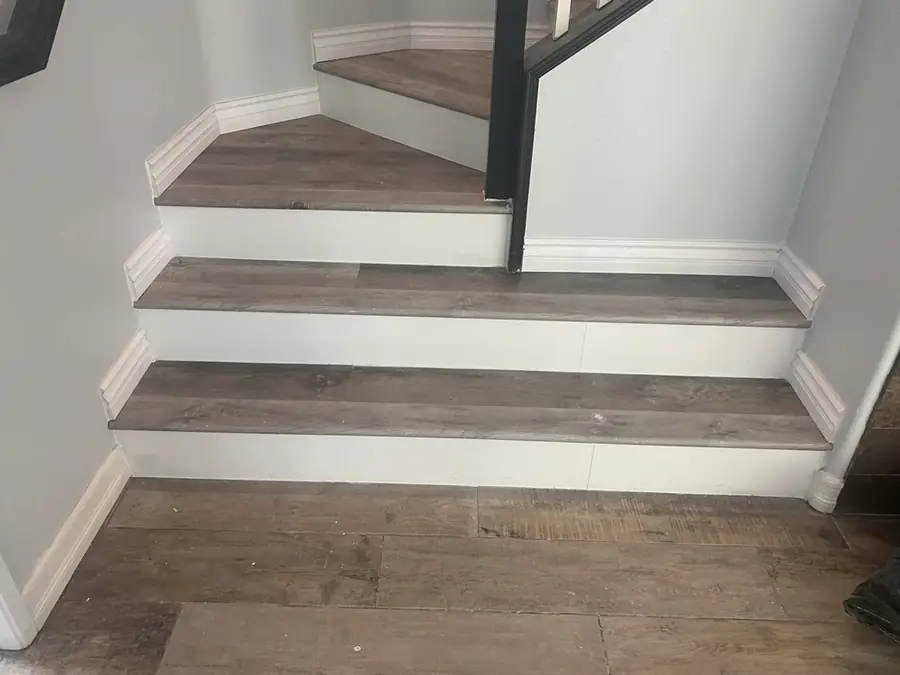
Matching profiles
Older homes in the valley often have trim profiles that home centers no longer stock. When only a few feet are damaged, we try to match the profile from lumber yards, or combine stock pieces to build up the look. When a whole room is being redone, picking a new profile and doing every wall gives a cleaner result than patching.
Materials
- MDF: smooth, stable and affordable, painted. Avoid it where it may get wet, such as bathroom floors.
- Finger-jointed pine: primed wood that handles moisture a little better than MDF.
- Solid wood: for stained trim or where a match to old stained trim is needed.
- PVC: waterproof, good for bathrooms and laundry rooms.
Cutting and fitting
Inside corners on baseboard look best coped, where one piece is cut to the profile of the other, because a coped joint stays tight when the wall moves. Outside corners are mitered and glued.
Walls in older homes are rarely straight or square, so we measure each corner rather than assuming 90 degrees. Crown molding is cut upside down and backward in the saw, and we use a test piece in each room before cutting the long runs.
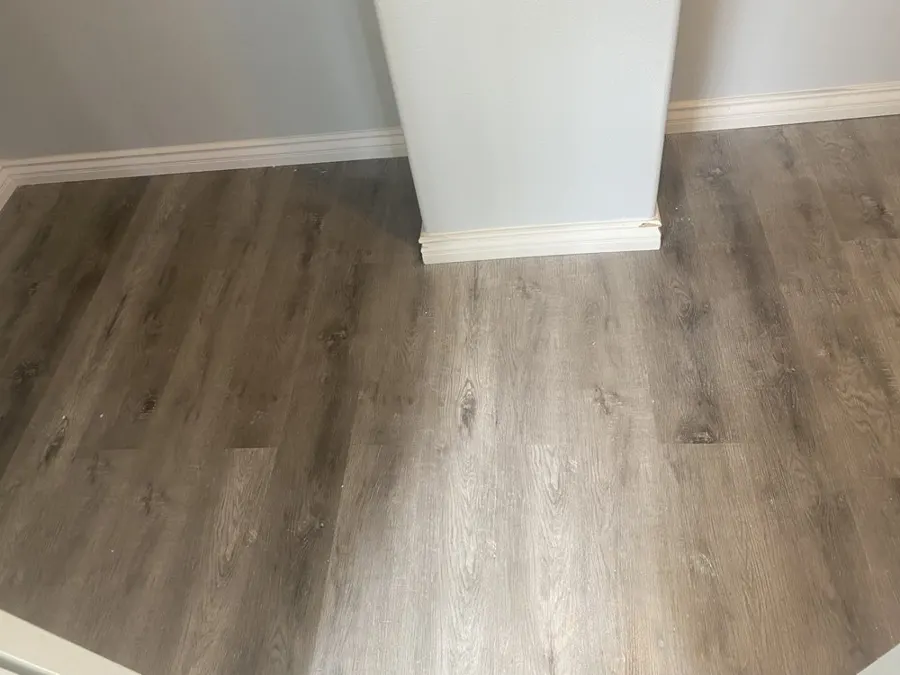
Nailing, caulking and paint
Trim is nailed to studs and the bottom plate, not just drywall. Nail holes get filled, gaps along the wall get a thin bead of paintable caulk, and the trim gets a finish coat of semi-gloss paint. Caulk hides small gaps but not large ones; a big gap usually means the wall bows, and we scribe the trim to follow it.
After new flooring
When new floors go in, baseboards are usually removed and reinstalled, or replaced. If the old ones come off in good shape, we reinstall them at the new height. If the floor floats, like laminate or luxury vinyl plank, the trim must not pin the floor down; we fasten it to the wall, not the floor.
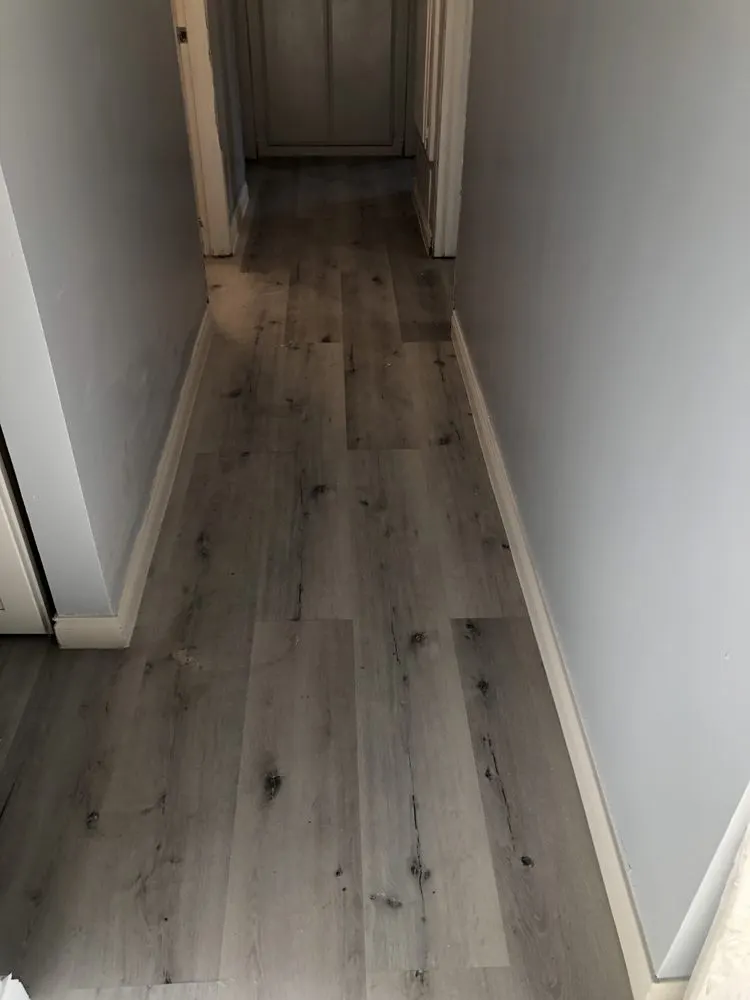
Quarter round versus taller base
Quarter round is a small molding nailed at the foot of the baseboard to cover the gap a new floor leaves. It is quick and affordable. Taller baseboard looks more finished and covers bigger gaps, but it means removing the old base. We help you choose based on the gap and the look you want.
Window stools and aprons
Windows with drywall returns can get a wood stool, the interior sill, and an apron below it. It is a classic look in older valley homes and gives a spot for plants. We fit them to each window, since few windows are perfectly square.
- PrepRemove loose or damaged material.
- RepairPatch, fill or reset the piece.
- Build upThin layers, each left to set.
- FinishSand, seal or paint to blend in.
Chair rail and wainscoting
Chair rail protects walls in dining rooms from chair backs. Simple picture-frame wainscoting can be built from trim pieces and painted to match. Both are good single-room projects.
- Total length of each wall, doors subtracted
- Inside and outside corners counted
- Profile and height you want
- Paint-grade or stain-grade wood
- Gaps at the floor after new flooring
- Paint color for the finished trim
Paint-ready finish
Our trim work ends with filled nail holes, caulked seams and a finish coat. If you prefer to paint yourself, we leave it primed, filled and caulked.
Old houses, uneven floors
In older homes the floor often dips or rises along a wall. Baseboard nailed straight leaves a gap that grows and shrinks along its length. We scribe the bottom of the base to follow the floor, which closes the gap without a thick bead of caulk. It takes longer per piece, but the line along the floor looks crisp.
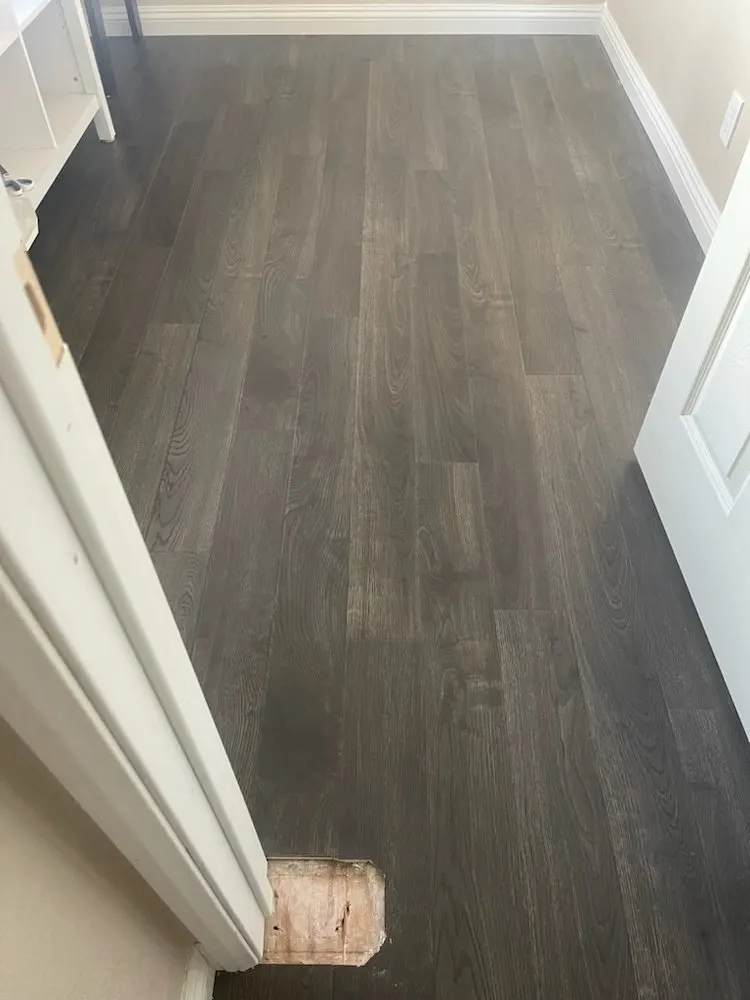
Door stops and shoe molding
Small details finish a room: door stops so handles do not punch holes in walls, shoe molding along tile floors, and returns on the ends of trim where it stops at a cabinet or a fireplace. We take care of those on the same visit.
What to send
Photos of the room, a close photo of the existing trim profile, and a note of the room size are enough for a quote.
Nail guns and noise
Trim work uses a compressor and nail guns. It is loud in short bursts. We set the compressor outside or in the garage when we can, and work room by room so you still have a quiet space.
- Small fixes and repairs
- Swaps on existing mounts
- Patching and adjusting
- Hardware, trim and assembly
- Structural framing changes
- Roofing and foundations
- New openings in walls
- Whole-room rebuilds
Bathrooms and laundry rooms
Floors in wet rooms get mopped and splashed. Baseboard there should be PVC or well-sealed wood with the bottom edge painted before install, and the joint at the floor caulked so mop water cannot wick into it. This one step keeps bathroom trim from swelling and peeling within a couple of years.
Garages and closets
Closets often get the cheapest trim or none at all. Matching trim inside closets makes a house feel finished, and it costs little when we are already cutting the same profile for the room.
- Wide shotThe whole fixture and the space around it.
- Close-upLabels, model numbers, the leak or break.
- ConnectionsValves, pipes, wires or brackets.
- Send itText the photos with your cross street.
Related guide: How a handyman quote is put together.
Photo checklist
- The damaged or missing trim
- The profile of existing trim, from the side
- Corners and door casings nearby
Questions we get
Can you match my old trim?
Often, from lumber yards or by combining stock pieces.
Do you paint trim?
Yes, after caulking and filling.
Can you install crown in one room?
Yes, single rooms are common.
- Quotes cost nothing
- The trim quote holds
Do you replace door casing?
Yes, matched to the rest of the house where possible.
Is MDF okay in a bathroom?
We prefer PVC or wood near water.
Can you match old trim?
We match common profiles; unusual historic trim may need a close substitute.
- Parts for the trim, priced first
- Bought one? Fine
Do you paint trim?
Yes, after caulking and filling.
Can you add quarter round after new flooring?
Yes, it covers the gap at the floor.
Why are my baseboards separating?
Seasonal movement or nails missing studs; re-nailing and caulking helps.
- Send us photos
- Ring us about the trim
Do I need to caulk baseboards?
On painted trim, caulking the top edge where it meets the wall hides small gaps and gives a clean line. Stained wood trim is usually left uncaulked.
Can you reuse baseboards?
Often, if they come off without splitting. Pry gently against a putty knife or scrap block, pull the nails through from the back, and mark each piece so it goes back in the same place.
Can you glue baseboards instead of nailing them?
Adhesive helps on uneven or masonry walls, but on framed walls, nails into the studs and bottom plate hold best. Many installs use both.
- English
- Mandarin Chinese
- Cantonese
Get a quote for baseboard, casing and crown molding
Text a photo and your cross street. Free estimates, and most texts are answered within the hour.
Good to fix along with the trim
Easy to add on the same trip: luxury vinyl plank flooring or interior painting and touch-ups. If the cause is elsewhere, see door repair and installation; patching holes in walls and ceilings and fixing soft, rotted wood come up often too.
Repairs related to the trim
Available across the San Gabriel Valley, including West Covina, Covina, Baldwin Park, Azusa, Temple City, Sierra Madre, Monrovia, Duarte, Irwindale and Glendora.