 Szeto Handyman
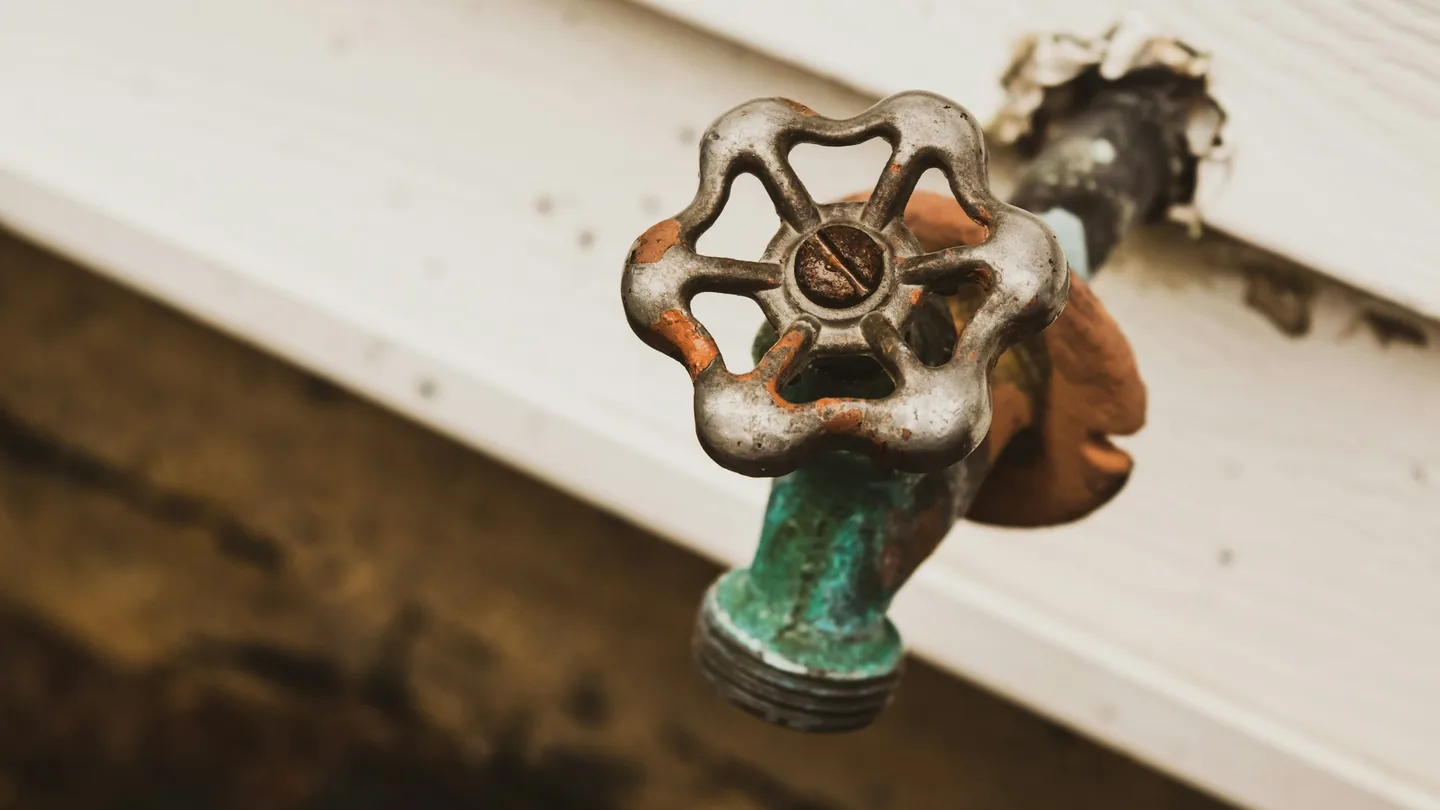
Common problems
- Drips from the spout when closed: worn washer or seat.
- Leaks around the handle when open: worn packing.
- Handle spins without shutting: stripped stem.
- Leaks behind the bib into the wall: failed connection inside.
- Broken off by a mower or a hose pulled too hard.
- Wide shotThe whole fixture and the space around it.
- Close-upLabels, model numbers, the leak or break.
- ConnectionsValves, pipes, wires or brackets.
- Send itText the photos with your cross street.
Repair or replace
Bibs that are in good shape can be rebuilt with a new washer, seat or packing. Heavily corroded bodies, stripped threads or bibs that leak behind the wall get replaced. We remove the old bib, check the pipe threads or sweat connection, and install a new bib on the existing pipe. Where the bib is attached to the wall loosely, we secure it so pulling a hose does not stress the pipe.
- Shut it offTurn the valve under the fixture clockwise, or the main valve.
- Relieve pressureOpen a faucet nearby so the line drains.
- Contain itTowels and a bucket; unplug anything wet.
- Photo and textSnap the leak and valve, then text us.
Vacuum breakers and backflow
A hose bib vacuum breaker screws onto the faucet threads and prevents water from a hose, such as one sitting in a bucket or connected to a sprayer, from being pulled back into the house supply. Many newer bibs include one. We add or replace vacuum breakers as part of the job.
Front bib and the main
In many valley homes, the front hose bib shares a spot with the main shutoff and sometimes the pressure regulator. When we work there, we check that the main closes and the regulator is not leaking, since these parts age together.
Water use outdoors
- All over the 626
- Hose bib help for homes and rentals
The EPA WaterSense statistics page notes that outdoor water use "accounts for more than 30 percent of total household water use, on average." A dripping bib or hose connection adds to that quietly.
What is outside our scope
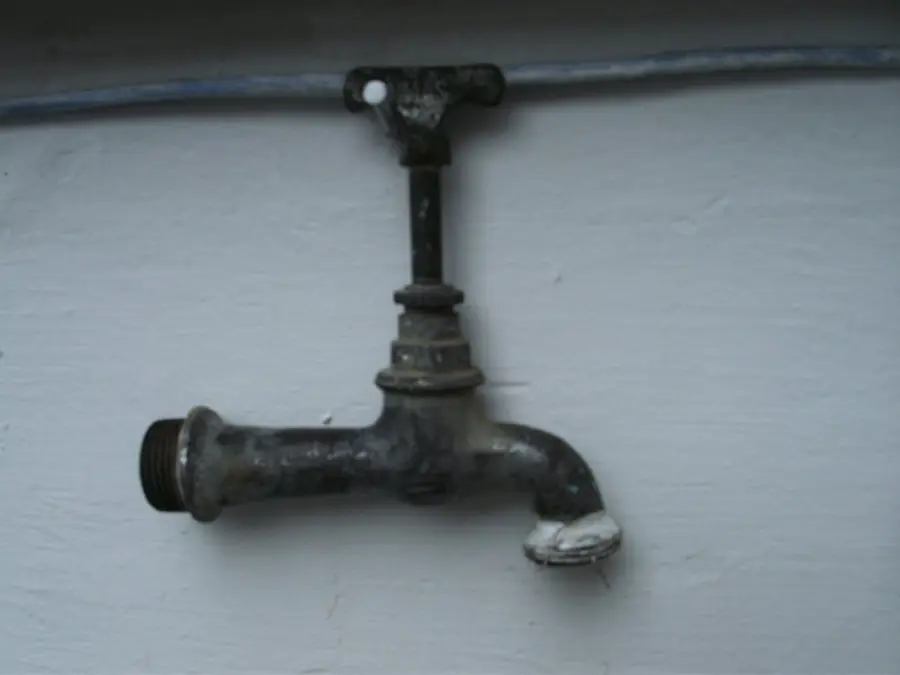
Adding a hose bib where none exists (which means a new line), and irrigation or sprinkler work, are outside our scope.
Hose thread and washers
Outdoor spigots use garden hose thread, which is not the same as the pipe thread inside the wall, so mixing the two takes an adapter. The rubber washer inside the hose coupling does the sealing.
A drip at the connection usually means a worn or missing washer, not a bad spigot, so swap the washer first. Quick-connect fittings left on a spigot can hold water in it; take them off when the hose is put away.
Types of hose bibs
- Compression bibs close with a rubber washer against a seat. Common, rebuildable.
- Quarter-turn ball bibs open fully with a 90-degree turn and resist seizing.
- Frost-free bibs close the valve inside the wall; less common in the valley, but present in some homes.
- Anti-siphon bibs include a built-in vacuum breaker.
- Faucets, toilets and valves
- Traps and drain connections
- Water heaters on existing lines
- Disposals and supply lines
- Moving or adding pipe runs
- Sewer and main drain work
- Repiping and new gas lines
- Slab leaks
Sweat versus threaded connections
Bibs connect to copper pipe either by threading onto a male adapter or by soldering directly. Threaded bibs come off with a wrench while holding the pipe steady so the joint inside the wall does not twist.
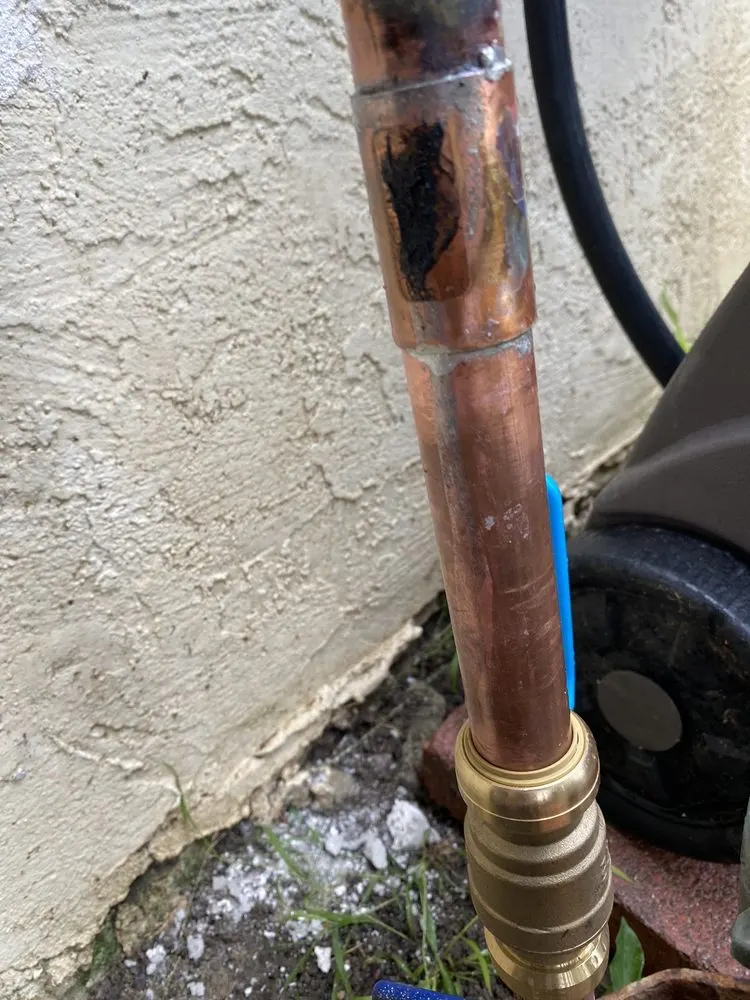
Sweated bibs need the old one cut or desoldered and a new one soldered or fitted with a push-fit adapter. Galvanized pipe uses threaded bibs; we check that the nipple is solid before threading on a new bib.
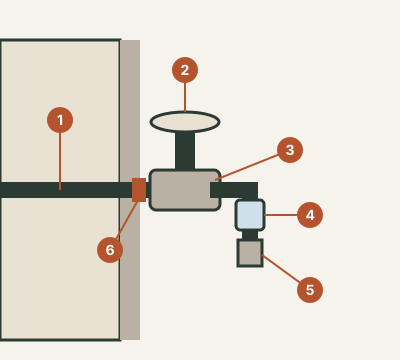
- Supply pipe through the wall
- Handle
- Valve body
- Vacuum breaker, which stops backflow into the house
- Hose threads
- Seal where the pipe leaves the wall
Pressure and outdoor fixtures
High house pressure shortens the life of hose bibs and hoses. If several fixtures drip or hoses burst, check the pressure at the bib with a gauge. A regulator replacement at the main may be the real fix.
Caring for outdoor faucets
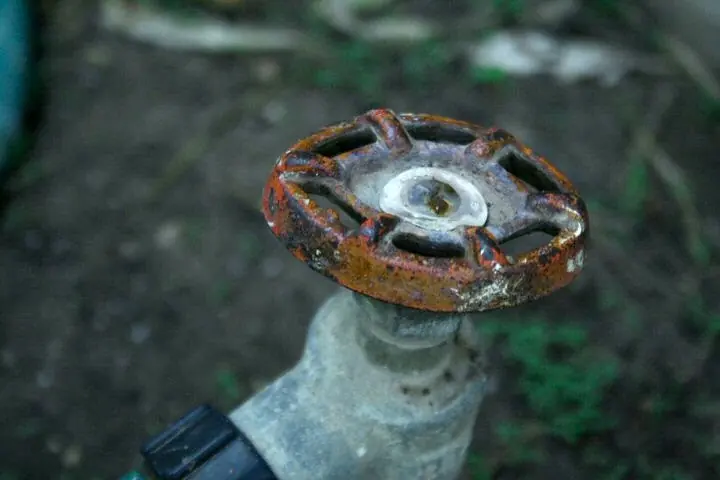
Disconnect hose-end sprayers when not in use so pressure is not held in the hose. Replace cracked hose washers each season. If a bib is set behind a planter, keep soil and mulch away from it so it can be reached and does not corrode as fast.
What to send
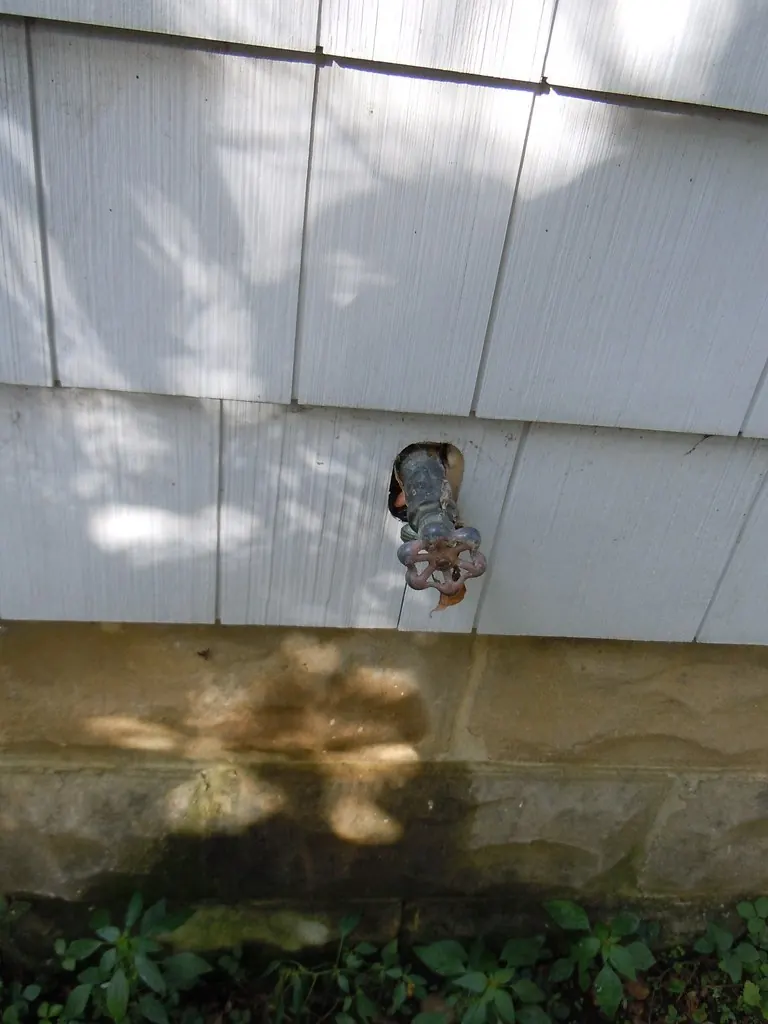
A close photo of the bib and a wider photo of where it comes out of the wall.
Signs of a leak behind the wall
- A wide shot
- Close-ups of the hose bib
- Closest intersection
Water that appears on the wall below the bib, efflorescence (white mineral bloom) on stucco around it, or a damp baseboard inside the house on the same wall all suggest a leak at the connection inside the wall. Turn off the main, note whether the meter stops, and send a photo.
We open the area around the bib when the leak is close to the surface, fix the connection and patch the stucco or drywall. If the leak is deeper in the wall, shut the water off at the main until it is fixed.
Outdoor water use and drips
EPA WaterSense statistics says outdoor water use "accounts for more than 30 percent of total household water use, on average, but can be as much as 60 percent of total household water use in arid regions." In a dry climate like the San Gabriel Valley, every drip at a hose bib adds to that total.
More questions
Can you add a splitter or a quarter-turn valve to my bib? Yes, on the threads, with a vacuum breaker kept in line.
- A picture or two
- We quote the hose bib
- Checked when done
Why does my hose bib squeal? A loose washer vibrating in the flow. A new washer and screw usually stop it.
Bibs on stucco walls
Most valley homes have stucco exteriors. A bib that has been yanked by hoses can crack the stucco around it and let water into the wall. When replacing a bib, we secure the pipe with a bracket or a mounting flange where possible, and seal the gap around the pipe with exterior-grade sealant so rain and sprinkler spray stay out. Small stucco cracks around the bib can be patched and painted to match.
Related guide: How to decide whether to repair or replace a faucet.
Photo checklist
- The spigot, close up
- Where it comes out of the wall
- Any water stains on the wall or ground beneath it
Questions we get
Why does my hose bib leak only when the hose is on?
The packing around the stem or the hose washer is worn.
Do you replace frost-free bibs?
Yes, with a matching length bib.
What is the cap on top of my bib?
Usually a vacuum breaker. It may drip briefly when the water is shut off, which is normal.
- Only a hose bib
- Or several things
Can you raise a hose bib that is too low?
Moving a bib means new pipe, so we replace it where it is.
Do you replace hose bib handles?
Yes, when the stem is good; otherwise we replace the bib.
Why does water squirt from the handle?
Worn packing behind the handle. Sometimes tightening the nut helps.
- A heads-up text before the hose bib
- Area protected and swept
Can I leave a hose connected?
Remove it when not in use, so the spigot can drain.
What is a vacuum breaker?
A small device that stops dirty water backflowing into your supply.
Why does my hose bib spray when I turn it off?
The vacuum breaker on top is releasing trapped water, which is normal briefly. Constant spraying means its seal has worn.
- Mon–Sat 8:30 AM–7 PM
- Closed Sunday
- Texts usually answered within the hour
Why does my hose bib squeal or knock?
A loose washer or worn stem vibrates as water passes. Replacing the washer or the stem assembly usually quiets it.
Is a hose bib the same as a spigot?
Yes. Hose bib, spigot, sillcock and outdoor faucet all name the same fixture.
- Someone home works
- Gate code for the hose bib job
Get a quote for hose bib and outdoor faucet repair
Text a photo and your cross street. Free estimates, and most texts are answered within the hour.
Good to fix along with the hose bib
Often bundled with replacing valves that will not close, water leak and burst pipe repair or porch light and floodlight swaps. Also worth a look: fence and gate repair and draining sediment from the tank.
Repairs related to the hose bib
We take this work all over the valley, in West Covina, Covina, Baldwin Park, Azusa, Temple City, Sierra Madre, Monrovia, Duarte, Irwindale and Glendora.