 Szeto Handyman
Leaking right now? Do this first
- A wide shot
- Close-ups of the water heater
- Closest intersection
If water is pooling under the tank, these steps limit the damage:
- Close the cold-water shutoff on the line at the top of the tank.
- Gas: turn the control to pilot or off. Electric: switch off the breaker for the heater.
- Keep your distance from the temperature and pressure relief valve; its water can burn.
- Set out a bucket or towels.
- Text a photo to (310) 628-9399.
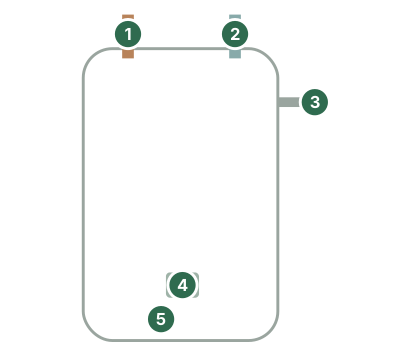
- Cold-water shutoff and inlet
- Hot-water outlet
- Temperature and pressure relief valve
- Gas valve or thermostat
- Drain valve, used for flushing
How old is your heater?
Find the serial number on the tank’s label. The date of manufacture is coded inside it, and brands each use their own system, so there’s no single rule to read it. Text us a photo of the label and we’ll tell you how many years it has on it.
- Faucets, toilets and valves
- Traps and drain connections
- Water heaters on existing lines
- Disposals and supply lines
- Moving or adding pipe runs
- Sewer and main drain work
- Repiping and new gas lines
- Slab leaks
What goes into the price
We quote from the details, not a menu:
- Gallons
- Gas vs electric
- Tall vs short
- Closet, garage or exterior access
- Stand or drain pan
- Connectors and straps
- Hauling the old tank away
Free estimate by text.
- Wide shotThe whole fixture and the space around it.
- Close-upLabels, model numbers, the leak or break.
- ConnectionsValves, pipes, wires or brackets.
- Send itText the photos with your cross street.
Signs your heater needs attention
- Water pooling under the tank, or rust at the bottom seam.
- Rumbling or popping when the burner runs, usually sediment.
- Hot water running out faster than it used to.
- A pilot that will not stay lit or a burner that will not fire.
- Brown or rusty hot water from several taps.
- A relief valve that drips or a drain valve that will not seal.
Some of these are repairs. A leak from the tank itself is not; once the steel liner fails, the heater has to be replaced.
What we repair
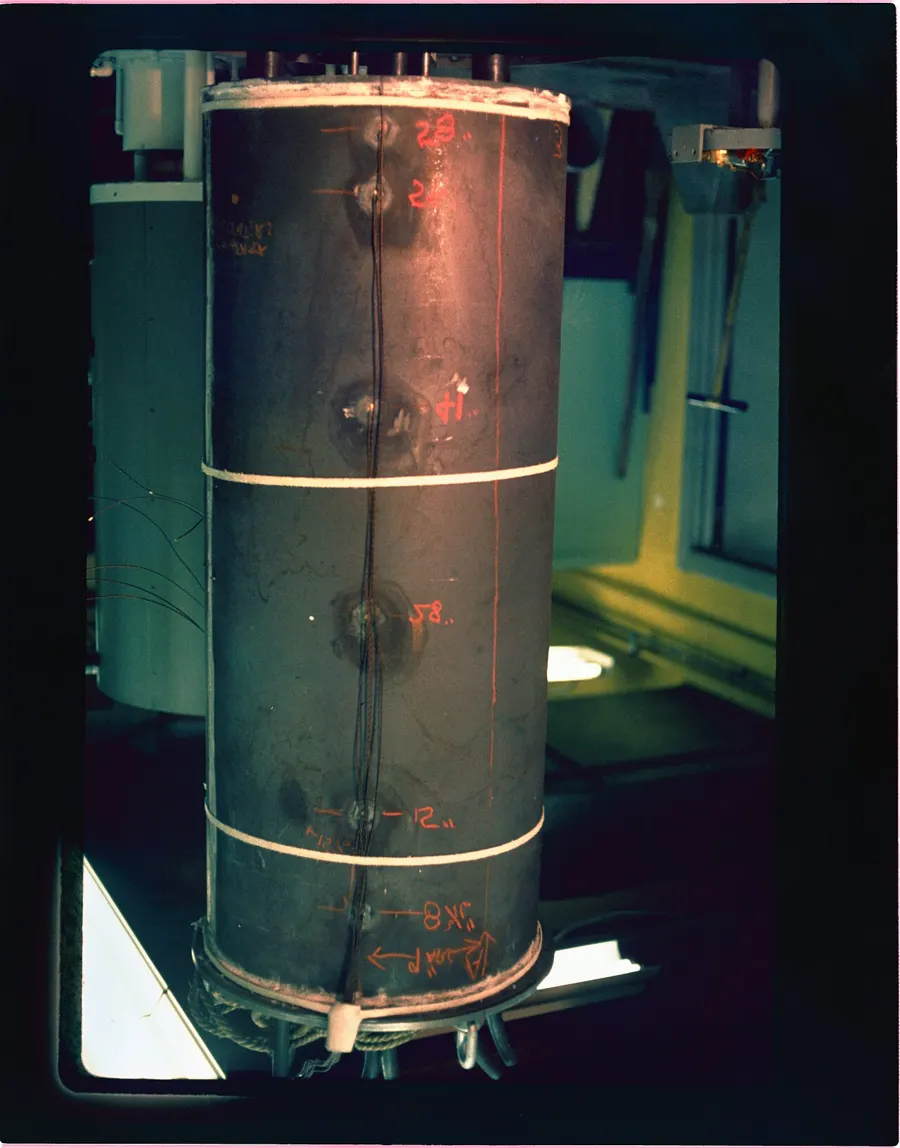
On an existing tank we can replace the temperature and pressure relief valve, the drain valve, the thermocouple or flame sensor on many gas models, and the elements and thermostats on electric models. We flush sediment, check the anode rod where it can be reached, tighten or replace the flexible connectors, and check the seismic straps and vent connection. When a part is no longer made for an older unit, we let you know before spending money on it.
Same-spot replacement
When the tank is done, we replace it with a new one of the same fuel type and similar capacity, in the same location, connected to the existing gas line, water lines and vent. That covers most homes in the valley, where heaters sit in garages, hall closets or exterior closets. We bring the new unit, set it on the existing platform or a new stand where needed, strap it, connect it, fill it, light it and test the relief valve and the venting.
- A picture or two
- We quote the water heater
- Checked when done
Moving the heater, converting gas to electric, changing to tankless or upsizing the gas line or vent is a different scope.
Flushing and maintenance
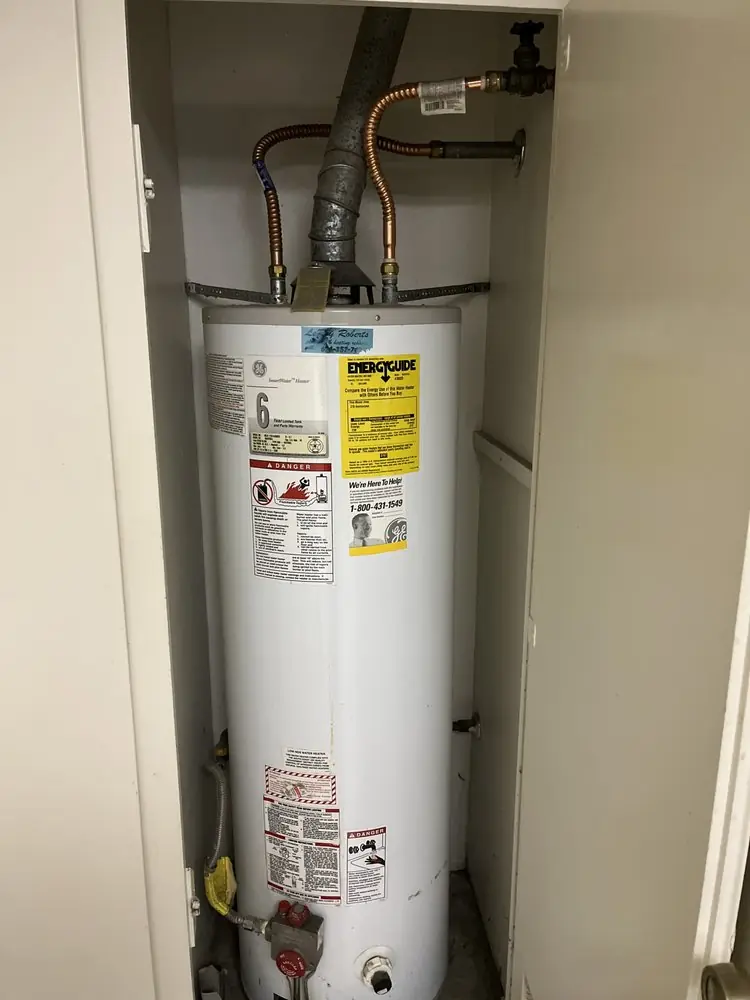
Hard water in much of the San Gabriel Valley leaves sediment in the bottom of the tank. A yearly flush helps the burner heat water efficiently and quiets rumbling. For tankless heaters already in place, we run a descaling flush through the service valves.
- Rust-colored hot water from more than one faucet
- Water pooling under the tank itself, not from a fitting
- Rumbling or popping that flushing does not stop
- Rust at the base or on the jacket seams
- The age on the label is past the maker's stated tank life
- Hot water running out sooner than it used to
What to send for a quote
Text three photos to (310) 628-9399: the full heater, the label on the side showing model and size, and the top of the tank showing the vent and connections. Add the city and cross street. We reply with questions or a quote, and parts depend on the job and are covered in the quote.
- Shut it offTurn the valve under the fixture clockwise, or the main valve.
- Relieve pressureOpen a faucet nearby so the line drains.
- Contain itTowels and a bucket; unplug anything wet.
- Photo and textSnap the leak and valve, then text us.
Safety checks on every visit
On repair and replacement visits alike, we look at the parts that keep a heater safe: the relief valve and its discharge pipe, the seismic straps required in California, the vent connector slope and joints, and the gas shutoff. If something unsafe turns up, like a cracked flue or a gas smell, we stop work and tell you right away.
What California law says about strapping
California Health and Safety Code section 19211 says that "all new and replacement water heaters and all existing residential water heaters, shall be braced, anchored, or strapped to resist falling or horizontal displacement due to earthquake motion." It also requires a home seller to certify in writing that this has been done. In the San Gabriel Valley, where the Sierra Madre and Raymond faults run close to many neighborhoods, a tank that tips over can break its gas connector and water lines at the same moment. Every tank we set gets a two-strap kit fastened into the wall framing, not just into drywall, and we look at the straps on an existing heater during any repair visit.
Common causes behind the symptoms
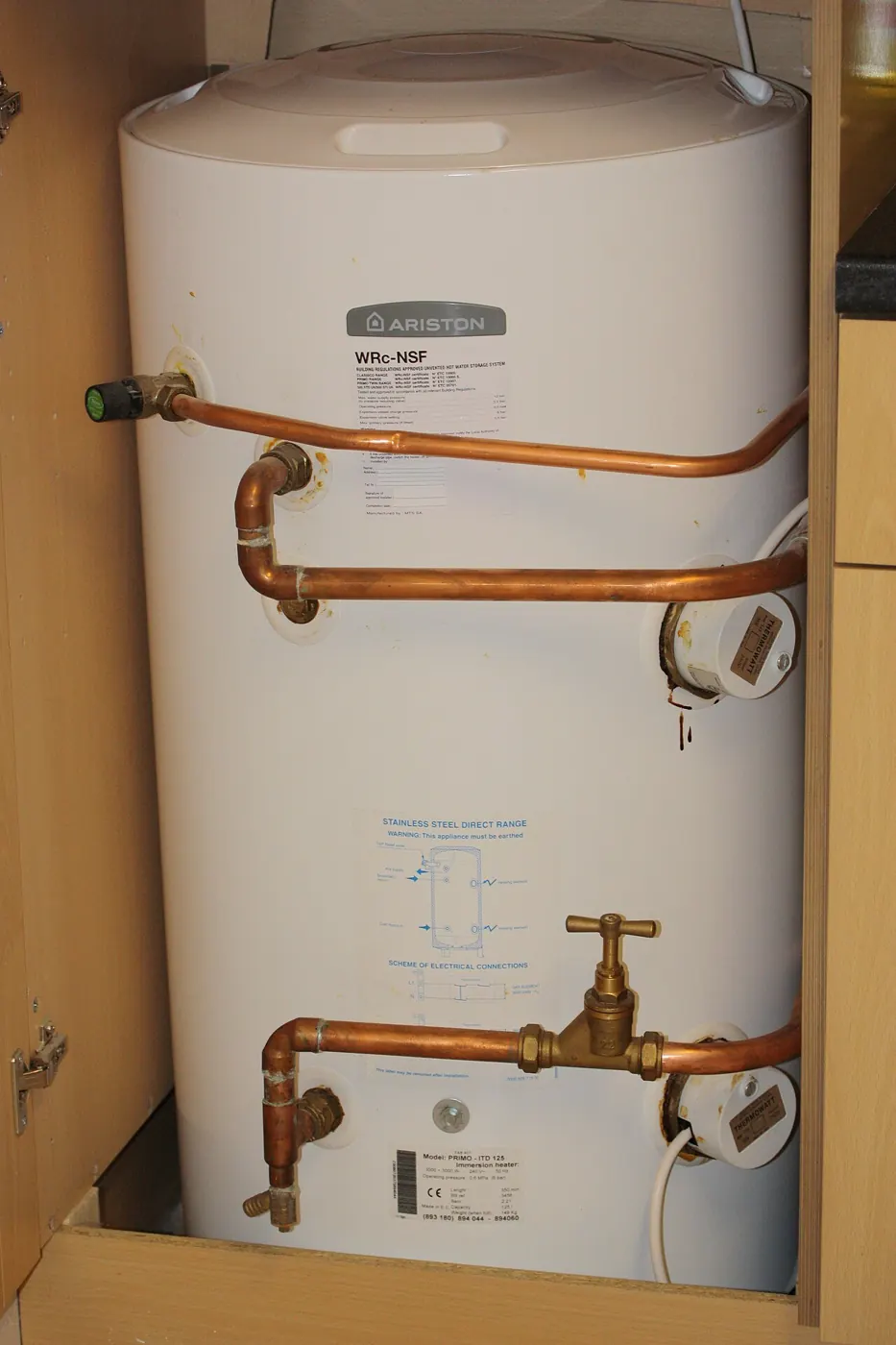
Sediment. Minerals settle on the bottom of the tank and the burner has to heat through a crust. That causes the rumbling, slower recovery and, over years, overheating of the bottom of the tank.
A worn anode rod. The rod corrodes on purpose so the tank does not. Once it is gone, the steel starts rusting, and rusty hot water or a rotten-egg smell can follow.
Ignition parts. On older standing-pilot gas models, a weak thermocouple lets the pilot go out. On newer models, a dirty flame sensor or a failing gas control valve can stop the burner from firing.
- Only the water heater
- Add a short list
Relief valve trouble. A temperature and pressure relief valve that drips can be worn, or it can be doing its job because pressure in the house is too high. If a thermal expansion tank is missing or waterlogged, or the pressure regulator has failed, replacing the valve alone will not stop the drip. We test the house pressure with a gauge on a hose bib before deciding.
Choosing a replacement tank
We match what you have unless there is a reason to change: same fuel, similar gallon size, same footprint and the same vent type. Tall and short versions of the same capacity exist, and the right one depends on the closet or alcove. When the household has grown since the last heater went in, moving up a size can make sense if the existing gas line, vent and space allow it; we check that before quoting.
- A message before the water heater visit
- Old parts hauled off
If you want a tankless unit or a heat pump water heater, that is a conversion rather than a swap, because gas line size, venting or a dedicated circuit usually changes. That part of the work is outside our scope.
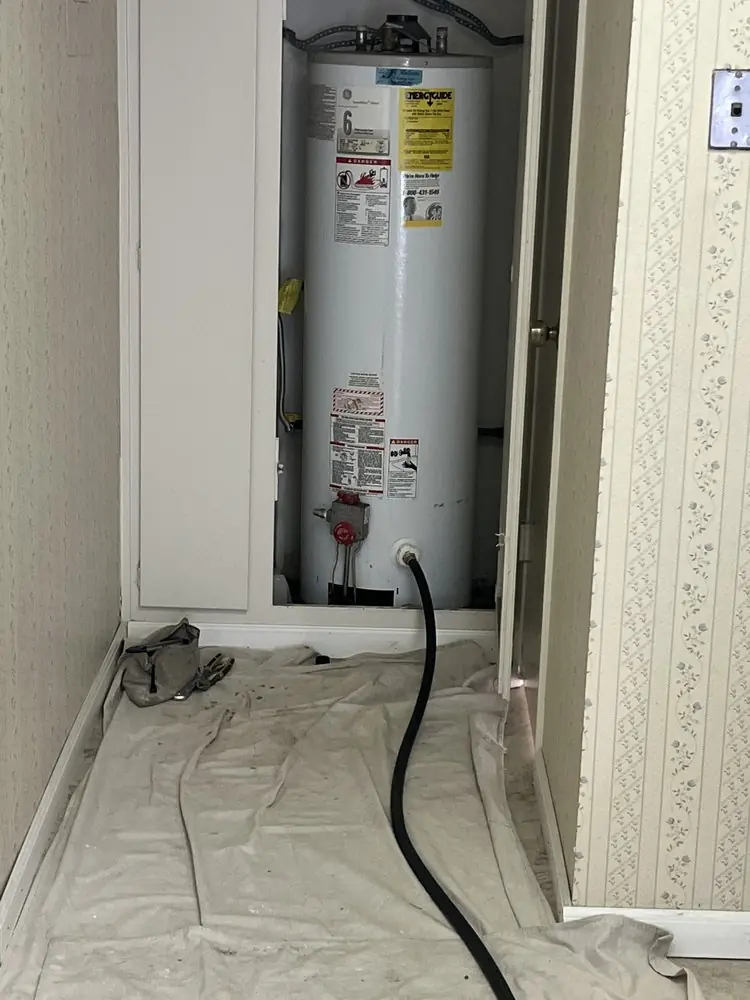
What is outside our scope
- Gas leaks or a smell of gas: leave the house and call SoCalGas or 911 first.
- Moving the heater, new gas lines or new vent runs.
- New circuits for electric or heat pump units.
- Slab leaks or pipe failures inside walls.
We can come back afterward for drywall, doors on the heater closet, or a new platform.
Related guide: How to decide whether to repair or replace a water heater.
Photo checklist
- The rating label on the side of the tank (model, serial, gallons, fuel)
- The top of the tank: water lines, gas line and vent
- The bottom: burner window or access panels, and any water on the floor
- The space around the heater, including the door or path in
- Any blinking light on the gas control (a short video counts the blinks)
Questions we get
Do you install tankless water heaters?
We flush and service existing tankless units and swap them like-for-like. A tank-to-tankless conversion is outside what we do.
How long does a tank last?
It varies by water quality and maintenance. The label shows the manufacture date, which helps us judge whether repair or replacement makes sense.
Can you haul the old heater away?
Tell us when you request the quote and we include it.
- Mon–Sat 8:30 AM–7 PM
- Closed Sunday
- Texts usually answered within the hour
How do I know how old my water heater is?
The manufacture date is coded into the serial number on the label. Each maker codes it differently; send us a photo and we will read it.
Is a dripping relief valve dangerous?
It is a warning, not something to ignore. The valve may be worn, or the house pressure or a failed expansion tank may be pushing it open. We check the cause before replacing the valve.
Why does my water heater make popping sounds?
Usually sediment at the bottom of the tank. Flushing it often quiets it down and helps it heat more efficiently.
- Tenant at home
- A lockbox for the water heater visit
What should I do if the tank is leaking right now?
Shut the cold water valve at the top of the tank, turn the gas control to off or switch off the breaker, keep away from hot water, and text us photos.
Why does my hot water smell like rotten eggs?
Bacteria in the tank react with the anode rod and give off a sulfur smell. Flushing the tank and swapping the anode for an aluminum-zinc one usually clears it.
Do I need an expansion tank?
If your home has a check valve or pressure regulator on the main line, the heated water has nowhere to expand, and an expansion tank takes up that pressure. We check for one when we replace a tank.
- Estimates are free
- Changes to the water heater need your OK
Why does the pilot light keep going out?
A worn thermocouple, a dirty pilot tube or a draft near the burner is the usual cause. We test those parts before anyone talks about a new heater.
- The quote lists water heater parts
- We fit yours too
Get a quote for water heater repair and replacement
Text a photo and your cross street. Free estimates, and most texts are answered within the hour.
Good to fix along with the water heater
While we work on the water heater, we can also look at water heater flushing and swapping stuck angle stops. Problem turns out not to be the water heater? Read water softener installation, burst pipe repair and cleanup or everyday plumbing fixes.
Repairs related to the water heater
Service area for this job: West Covina, Covina, Baldwin Park, Azusa, Temple City, Sierra Madre, Monrovia, Duarte, Irwindale and Glendora.
Brand-specific notes: A.O. Smith water heater service, Rheem water heater service and Bradford White water heater service.